


Zieliński, Kamiński and the art of reinvention
- Bruce Davis

- Dec 19, 2025
- 4 min read

This article has been gestating in my head for a while now, so it’s about time I finally got around to putting it out there.
What I’m writing about is not earth-shattering and is fairly obvious, but it’s still something I think needs to be said, particularly as we often get told by pundits and indeed managers or coaches themselves how vital versatility can prove to be.
I thought it would be interesting to look at both Piotr Zieliński and Jakub Kamiński, how this season they’ve been asked to slightly change the positions they play in and thus how they play, and why it’s been a boost for them in the context of both club and international football.
Take Zieliński as the first of these examples. He’s always been a fairly versatile midfielder, albeit more on the creative side. This season he’s been asked to play a more withdrawn, deeper role in which he has started to flourish for Inter Milan. After initially appearing unfavored by Cristian Chivu, he’s blossoming into just as much as key part of the Inter midfield as the more established, longer-serving names he is competing with.
It’s not as if we’ve not seen Zieliński drop to receive the ball before in his career, but usually that is followed by getting himself into more advanced areas. He still does this too, of course, but his ease when it comes to taking the ball under pressure always seemed like it might favour this transition into a more withdrawn role later in his career.
I should add it’s also not like we haven’t seen this idea of Zieliński as a deep playmaker before; Michał Probierz experimented with this as Poland manager towards the end of 2024, but there was the sense that this wasn’t getting the best out of Zieliński because it was too far removed from what he was being asked to do for his club at that time.
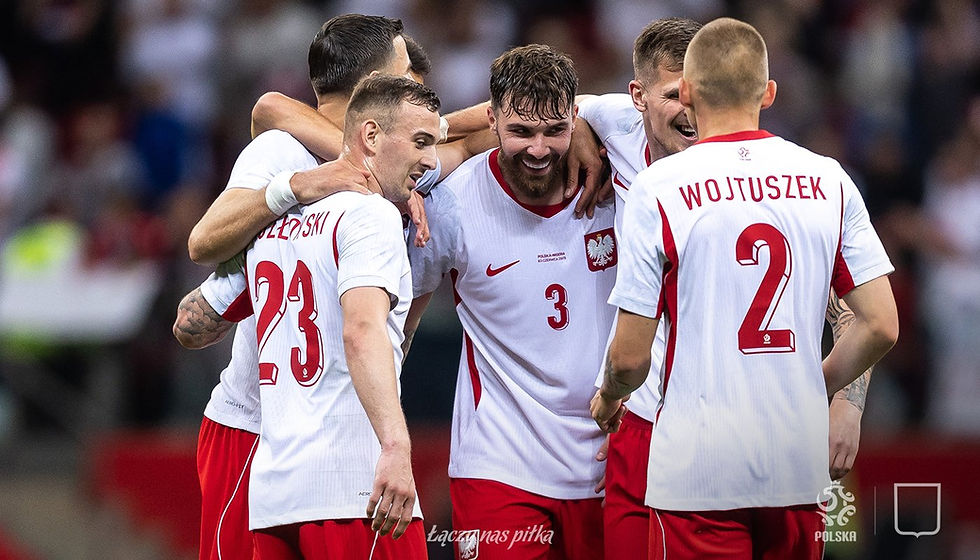
Now however, this metronomic role Zieliński has been given at Inter has also been to the benefit of Jan Urban and his new-look Poland side. I’m thinking particularly Zieliński’s performance against the Dutch in Warszawa last month, during which he really helped control the game in the second half when Poland had surprisingly long spells of possession.
The idea of having a more attacking, extremely technically proficient midfielder move back as they get older is hardly a new one, but it’s testament to Zieliński’s talent that it has worked so well for both club and country in these last few months.
Looking now at Kamiński, and whilst he is still given license to drift to those more familiar, wider positions with both Köln and Poland, he is essentially playing in a central “no. 10” role. I’d even argue he’s become something of a second striker when teaming up with Robert Lewandowski in the national team, Kamiński’s goal against Holland showcasing this to great effect.
Köln and their manager Lukas Kwasniok do still sometimes put Kamiński in those more traditional wing or wing-back roles he has been deployed at in the past, but when put in the more central areas as he often has this season, the goals and assists have really been flowing.
It’s no secret that one of Kamiński’s greatest attributes is his speed, which has been helpful in this transition to a new position. Whilst this has been a part of his successes at his club, I would argue his best games in this role have been when playing for Poland this autumn.
His link-up with Lewandowski looks like it has become a really stable attacking partnership, that goal against the Dutch as well as during the game against Finland in September really showing they can operate on a similar wavelength. Transitions and counter-attacks have been a real staple of the way Poland play for years now, even when the national team has been strong, and putting Kamiński in the area of the pitch he can do the most damage on the counter makes perfect sense.
I’ve referenced Lewandowski a couple of times in the last few paragraphs, and I actually think it might be time for him to start considering how to adapt his role, as he is obviously starting to get older. A succession of minor muscle injuries means he is not a nailed-on starter anymore for Barcelona, and he can’t always do everything himself in the national team as he once could.
Obviously it should go without saying Lewandowski is still a fantastic striker, and maybe this could indicate a change into a more target man style of role. Not your average big bloke to lump the ball up to, but someone who can receive the ball under pressure, hold it up and lay it off, not to mention someone who can be lethal in the box. Lewandowski’s best performances in the last 12-18 months, at least in my opinion, have been when he has played to these strengths. Perhaps therefore this adaptation is well underway, and we’ve been a little more blinkered to it because of who he is.
I’d like to finish by saying that when it comes to discussing more high-profile players like this, one can get quite drawn in to viewing them without fault. I’m under no illusion that at some point these changes of role may backfire, but I hope that we as supporters can understand this, rather than demand a return to what is more familiar.
For more, follow @ekstraklasaexp on Twitter and @ekstraklasaexports on Instagram to know when new posts go live.

Comments